Showing posts with label Assignment. Show all posts

6/23/18

Paper on Graphic Novels

Well, I seem to be having trouble finishing a book, plus I’ve been quite busy since summer started. I have tried to read about 2 books a month but have not completed that many reviews. I started working the Summer Reading program at my local library and have been reading many children’s books for it but have not yet reviewed one, though I should try…maybe.

Better late than never, expesially since I challenged my self to post every two weeks. Here is a paper titled “Graphic Novels: Hinds and O’Connor” which I wrote for my Emerging Trends in Literature for Children and Young Adults class at San Jose State University where I completed my MLIS degree in December.  And if you are interested in other posts about Graphic Novels check out my other posts in my Grpahic Novels tab.

The following text is my paper:
Graphic Novels: Hinds and O’Connor
            Graphic novels are relatively new to the world of young adult (YA) literature, though they are based in the realm of comics, with the term originating in 1978 with Will Eisner (Chance, 2014). According to Hintz and Tribunella (2013) graphic novels are on the boundary between children’s and adult literature, and sometimes it can be difficult to place them in either category. However, while most graphic novels are written for adults, there are some authors who write specifically for YAs. An important aspect of graphic novels is the way they combine illustrations and words to tell a grander story than either can alone.  Some graphic novels have both an author and an illustrator, while others, such as The Olympians by George O’Connor, have only one author/illustrator. Two such author/illustrators are Gareth Hinds and George O’Connor.
Gareth Hinds
            Gareth Hinds grew up in a small town in Vermont where he often drew as a child. Hinds began developing his career as an illustrator in elementary school. Hinds states that he “…used to make these thirty-page Star Trek stories with markers on scrap paper, with wallpaper samples for covers” (Candlewick Press, 2015). These homemade comic books would become the launching point for a successful career in graphic novels. His love for visual storytelling continued during his high school years where he drew illustrations for the newspaper, co-edited an illustrated literary magazine, and painted a mural in one of the hallways (Hinds, n.d.).
Hinds received degrees from Parsons the New School of Design and Rochester Institute of Technology.  Hinds began his career in digital media designing and illustrating computer games. His first graphic novel was Bearskin based on an obscure Brothers Grimm tale. Following this debut, he began to retell classic stories from Shakespeare plays, Beowulf¸ and The Odyssey.
George O’Connor
            George O’Connor found his passion for visual arts and comics as a child. In an interview with Dawna Buchanan (2014), O’Connor recounts a story of some of his earliest attempts at graphic stories. He shares how when he was young he would take sheets of oak tag and draw images like comic strips around the edges. In the same interview, he mentions how he “…always wanted to use [his] art to tell stories” (Buchanan, 2014, 116). In fourth grade he was introduced to the Greek myths and became entranced by them, enjoying to read as much as he could about them. He notes that his favorite book during middle school was D’Aulaires Book of Greek Myths (Keller, 2010). This passion for the Greek myths paired with a love of comic books would lead to his graphic novel series called Olympians.
O’Connor received his formal education from Pratt Institute, though much of his style came from on the job work he was doing. O’Connor began his illustrating career with a picture book entitled Kapow! which became a New York Times bestseller. His first graphic novel was an adaption of Journey into Mohawk Country, detailing the journal of a Dutchman traveling from Albany New York to Iroquois country to establish trade routes. He has followed this work by Ball Peen Hammer and his Olympians series (Wikipedia, 2016).
Two Artists, Similar Styles
            Both Hinds and O’Connor note how their styles have evolved since they began working in graphic arts. Hinds, in his article “Paint and Pixels,” explains how he is flexible with both technique and media when creating his artwork. O’Connor makes a similar comment in an interview with Mike Rhode (2011) where he explains that it is difficult to select one type or style because he changes from project to project. In regards to O’Connor’s preferred media, he discusses how he uses both traditional drawing items paired with a computer and digital media (Rhode, 2011).
Different Project, Different Style
            One look at the works of Gareth Hinds proves what he claims is true about his projects, each one has its own style and feel. Where Beowulf is full of colors, albeit muted, his The Merchant of Venice is done completely in black and white drawings. Hinds (2007) notes that because each work he adapts and illustrates have their own feel “…it seems wrong to use the same technique to illustrate them” (70). His desire to show the ambiance of the original work shows through and helps readers see encounter and understand works better than just reading them. When explaining his preferred technique Hinds (2007) states that he prefers traditional means, such as paint and brush or pen and ink, to digital but because of time and space constraints often works with a blend of the two mediums.
Combining Traditional with Digital
            Unlike Hinds, O’Connor is a self-proclaimed “combo man” meaning that he likes to use both digital means and computers to create his art. He will outline his art in pen and ink then finish it using digital software (Rhode, 2011). O’Connor’s graphic novel illustrations are different from his illustrations for novels, such as Mission: Spy Force Revealed by Deborah Abella. O’Connor’s graphic novels, specifically his Olympian series, are laid out and drawn in a comic book style to draw in the audience to the stories. One of the major influences on O’Connor’s style were superhero comics, this love for superheroes can be seen in the way he illustrates and presents the Greek gods in his graphic novels. O’Connor states that he saw a connection between the Greek gods and heroes of myth and superheroes beginning in fourth grade (Keller, 2010).
Appeal: Graphic Novels
            Graphic novels appeal to many different readers and age levels. According to Chance (2014) graphic novels do not just appeal to teens who are reluctant readers but will appeal to many different teens. She states “…graphic novels appeal to a generation of readers who are immersed in media, interactive web activities, and nonstop visual stimulation” (34). The graphic novel adaptions of both Hinds and O’Connor present classic stories and heroes for a whole new generation in a way that they can understand.
            Hinds’ adaptions of Shakespeare’s plays and other classic works open them up for the current generation to better visualize and understand them. He uses modern translations of works such as Beowulf and The Odyssey. His works use illustrations to demonstrate nuances in the text which, without a vivid imagination, would be hard to see. Hinds allows readers to live in the world of the play or work for the duration of the graphic novel. The novels allow the reader to feel the emotions of the characters and understand the subjects presented better through the use of color, style, and medium.
            O’Connor’s Olympians series comes at a time when the Greek myths are becoming popular again. With his vivid colors and unique style reluctant readers can learn about the myths in a fun and entertaining way. His illustrations help readers see the world of the Greeks unlike other books about the myths without images. In an interview he thanks “…Rick Riordan for helping push Greek mythology into the spotlight again” (Keller, 2010). This nod to the trend of the re-envisioning of classic Greek myths shows the appeal seen in the series produced by O’Connor. His other works also appeal to teens because of the use of color and the simple style.  
The works of both Hinds and O’Connor are accessible and easily read in a short amount of time. Their styles of illustration may be different and their techniques varied but the use of color and images aid the readers in understanding the text. Hinds heavy brush strokes in Beowulf but elegant lines in other works show a variety of styles even within one artist’s body of work yet both appeal to their intended audience. The comic style presented by O’Connor engages the reader and reminds them of the heroics shown in superhero comics yet in a longer more detailed work.
Thematic Trends
            The works presented by both authors fit into a theme and a trend in YA literature. Many of Hinds’ works fit into the 2016 trend of “Classic Lit Change-Ups” presented by Lisa Parkin’s (2015) in her article about coming trends in YA literature. His adaptions of classic Shakespeare plays, like Romeo and Juliet, presented with multiracial characters, and The Merchant of Venice, presented in monotone black and white. Other works of Hinds which fit into this trend are Beowulf, The Odyssey, and Bearskin: A Grimm Tale.
            O’Connor, as mentioned above, presents colorful retellings of classic Greek myths. His Olympians books can also be placed into Parkin’s (2015) “Classic Lit Change-Ups” category because of the legends behind the tales. These are the works which O’Connor is most known for though he has illustrated other works. Another of his works, Journey into Mohawk Country, corresponds to the rise seen in non-fiction literature because it is based on the real-life journal of an explorer (Allender, 2012). 
Gareth Hinds Annotated Bibliography
Hinds, G. (1998). Bearskin: A Grimm Tale. Thecomic.Com.

The retelling of an obscure Brothers Grimm fairytale beautifully illustrated in black and white ink drawings. Hinds creates the dark mood of this tale with the use of heavy dark lines illustrating the treasury of the deal struck. Bearskin recounts the story of a homeless soldier who strikes a deal with the Devil for untold riches if only he can live seven years in the skin of a bear he has killed.
Hinds, G. (2007). Beowulf. Cambridge, MA: Candlewick Press.

A vividly illustrated adaption of one of the oldest epic poems still existent Hinds Beowulf draws the reader in and holds them until the end. The story of Beowulf unfolds in skillfully drawn images which complement the text. Readers will feel the tension in the air as Beowulf battles monsters to free the Danes halls from terror. The novel ends with Beowulf taking his final stand to defend his country from the Worm and a eulogy to this great legend.
Hinds, G. (2008). The Merchant of Venice. Cambridge, MA: Candlewick Press.

Hinds brilliantly merges Shakespeare’s famous verse with modern English in this adaption of The Merchant of Venice. Hinds presents the story in stunning black and white drawing with the text alongside. The classic characters are presented in a modern world where Bassano traps his friend, Antonio in a bargain with a moneylender all for the love of Portia. Can Antonio be saved by Portia?
Hinds, G. (2010). The Odyssey. Cambridge, MA: Candlewick Press.

The classic story of Odysseus and his journey to return home to Ithaca is wonderfully illustrated and adapted in this retelling by Gareth Hinds. The vibrant colors of the painted images bring the world of ancient Greece to life for modern readers. Hinds has brought this classic epic poem to life with his adaption of image and text. Follow Odysseus on his journey home as he fights monsters and gods to return home to his beloved Penelope.

Hinds, G. (2013). Romeo and Juliet. Cambridge, MA: Candlewick Press.

Another adaption of the Bard’s works by Gareth Hinds. In this adaption, readers are presented with a multiracial cast of one of the most well-known works of William Shakespeare. The story of Romeo and Juliet unfolds in the medieval setting with one exception the cast is multiracial. Readers of all ages will enjoy this colorful and multicultural retelling of the struggle between two young lovers and their families.
Hinds, G. (2016) Macbeth. Cambridge, MA: Candlewick Press.

Macbeth explores the darker side of the Bard. In dark and foreboding imagery Hinds has once Macbeth for modern readers along with the creepy witches, ghosts, murder, and madness. This graphic novel allows readers to understand the play and engages reluctant readers. Macbeth tells the story of a man who is willing to do almost anything, even commit murder to receive the crown. Is the price too high to keep the crown, how many more will be murdered?
again brought to life the world of Shakespeare. Adapting

George O’Connor Annotated Bibliography
O’Connor, G., Sycamor, H., and Van Dan Bogaert, H. M. (2006). Journey into Mohawk country. New York: First Second.

The journal of Harmen Meyndertsz van den Bogaert about his journey to the country of the Mohawk Indians to establish trade. The journal details the adventures Bogaert encountered as a
young Dutchman traveling in Indian territory. The text accompanied by the simple images drawn by O’Connor detail the hardships of the first explorers. O’Connor presents the journal in stunning illustrations detailing nuances in the text.  The artwork brings the journal to life for the modern generation providing them with a glimpse into an almost forgotten past.

O’Connor, G. (2010). Zeus: King of the gods. New York: First Second.

The first in the Olympians series tells the story of the ruler of the Greek gods, Zeus. O’Connor presents Zeus as a superhero of ancient Greece. The book explores the myths surrounding Zeus and his rise to King of the gods. Follow Zeus as he grows from a boy to a man while having adventures romance and even some explosions.
O’Connor, G. (2011). Hera: The goddess and her glory. New York: First Second.

Hera: The Goddess and Her Glory details the rise of Hera to the wife of Zeus and Queen of the
gods. A second narrative is told of Heracles, the mortal son of Zeus and Alcmene. O’Connor has drawn upon the old myths to detail the life of this goddess. His comic book style entices readers to read to the last page. The book ends with a unique twist and forgotten myth about Hera, the Queen of the gods.
O’Connor, G. (2013) Poseidon: Earth Shaker. New York: First Second.

The fifth installment in O’Connor’s Olympians series tells the thrilling story of Poseidon King of Poseidon: Earth Shaker shares the most famous feats of Poseidon and explains why he is called the earth shaker.
the Seas. The story features the artwork and writing of O’Connor to tell the stories of Greek heroes who encountered Poseidon. Some of the stories include the founding of Athens, Odysseus and Polyphemus and Theseus and the Minotaur.

O’Connor, G. (2015) Ares: Bringer of war. New York: First Second.

The seventh graphic novel in O’Connor’s Olympians series focuses on the God of War himself. It has been ten years since the Trojan War began and Ares is battling against Athena. Using his unique style for illustrating the myths O’Connor once again brings life to old stories retelling them for a new generation of readers. Who will win this epic clash of armies and what will be the toll paid by the armies they lead? 

O’Connor, G. (2016).Apollo: The brilliant one. New York: First Second.

The eights book in the Olympians series explores the life of Apollo one of the twins born to Zeus and a she-wolf. The Muses tell the story of Apollo’s journey through the world to fulfill his destiny and find rest. Can Apollo live up to the standards of his father and attain Olympus or will his temper get the best of him? 


                                                                      References
Allender, D. (2012). 10 trends in children’s books for 2013 [video]. Scholastic. Retrieved from https://www.youtube.com/watch?v=7mPsJ7qaS0g
Buchanan, D. L. (2006). Gloria Skurzynski (author) and George O'Connor (author and illustrator). (2006). Intervention in School & Clinic, 42(2), 114-117. Retrieved from http://libaccess.sjlibrary.org/login?url=http://search.ebscohost.com/login.aspx?direct=true&db=a9h&AN=22798955&site=ehost-live
Candlewick Press. (2015). Bios: Gareth Hinds. Retrieved from http://www.candlewick.com/authill.asp?b=Author&m=bio&id=5283&pix=y
Chance, R. (2014). Young adult literature in action: A librarian’s guide (2nd ed.). Santa Barbara, CA: Libraries Unlimited.
Hinds, G. (n.d.) GarethHinds.com. Retrieved from http://www.garethhinds.com/index.php
Hinds, G. (2014). Paint & Pixels. Horn Book Magazine, 90(2), 70-71. Retrieved from http://libaccess.sjlibrary.org/login?url=http://search.ebscohost.com/login.aspx?direct=true&db=a9h&AN=94509041&site=ehost-live 
Hintz, C., and Tribunella, E. L. (2013). Reading children’s literature: A critical introduction. Boston: Bedford.
Keller, E. (2010). Interview: George O’Connor. School Library Journal. Retrieved from http://blogs.slj.com/goodcomicsforkids/2010/01/31/interview-george-oconnor/
Parkin, L. (2015). 5 exciting ya book trends for 2016. HuffPost Books. Retrieved from http://www.huffingtonpost.com/lisa-parkin/5-exciting-ya-book-trends-to-look-for-in-2016_b_8328078.html
Rhode. M. (2011). Meet a visiting cartoonist: A chat with George O’Connor. Washington City Paper. Retrieved from http://www.washingtoncitypaper.com/blogs/artsdesk/books/2011/09/23/meet-a-visiting-cartoonist-a-chat-with-george-oconnor/
Wikipedia. (2016). George O’Connor (comics). Retrieved from https://en.wikipedia.org/wiki/George_O%27Connor_(comics)

Additional References: All Images from Goodreads.com

12/16/17

Understanding Comics Review/Paper

Well, this week I finished my MLIS classes at San Jose State iSchool and realized I have not finished a book in a few weeks. So, for this week’s blog, I found this old paper about Scott McCloud’s Understanding Comics. I really enjoyed reading this book and found the information helpful when reading graphic novels/comics. I had not read many, except the funnies in newspapers, before taking a class last semester. So, here is my paper explaining what I learned from the book. Hope you find it interesting.
Scott McCloud’s Understanding Comics
            Scott McCloud (1993) explains his understanding of comics and the ‘invisible art’ they represent in his book Understanding Comics: The Invisible Art. Readers are introduced to the basic ideas necessary to understand comics not only as a genre or style but as an art form. McCloud (1993) also discusses what makes comics unique and how readers participate in the art. Comics provide readers with the ability to immerse themselves in art and artists can express their message in a new way.
            Comics demand active participation from the readers and make them feel that they are part of the action. They use icons to describe what is taking place, these icons represent many elements both visible and invisible. Comics are more than the sum of their parts making them unique from all other forms of art or literature. McCloud (1994) states that “[i]cons demand our participation to make them work. There is no life [in an icon] …except that which [readers] give to it” (59). The life of comics comes not only from the creators but from the reads and their imaginations.
            This giving of life is seen by what takes place not only in the images and words but in the blank space between panels. McCloud (1994) explains that the magic happens in this blank space between panels known as the gutters. The gutters bring the reader into an active role while reading the comics. The reader must supply what takes place between frames to make a complete story. The example offered by McCloud (1994) is two panels one of two men, one with an ax the other scared. The second panel shows the city skyline and the sound “EEYAA!!” leaving the interpretation of what just conspired to the reader (66). Readers infer that there was a murder in the small space between the panels, completing the story in the gutter. Comics rely on readers’ participation to make an exciting story.
            Comics also depend on readers to participate voluntarily in the process of closure. This closure allows comics to show the movement of time and space. McCloud (1994) explains it this way “[c]omics panels fracture both time and space, offering a jagged staccato rhythm of unconnected moments. But closure allows us to connect these moments and mentally construct a continuous, unified reality” (67). Closure enables readers to create full scenes from what they are being offered. This important aspect of participation from readers allows comics to flow along a given path and tell a marvelous action packed story which moves the readers to not only see the visible but also the invisible elements of life.
Closure does not only take place between the panels but also within them. Readers have the ability to complete an image in their minds, especially of everyday items, things, or events.  When artists chose to only draw a small section of an image in a panel the readers must interpret what is taking place and infer what will happen from it. The mind will not only add additional visual elements but will use memory to add in sounds and smells conveyed by the panels.
            This drawing in of the other senses helps comics to create a more real and lifelike world. This world draws readers into it through participation recalling memories, smells, sounds, etc. Comics have methods to represent sound, smell, and emotion. Each method draws readers more into the story allowing for viewer participation, whether voluntary or involuntary. When reading comics, the icons and lines show what is taking place, even if in the real world it would be unseen. McCloud (1994) states that comics are the “[d]ance of the seen and the unseen” (92). The invisible is made visible through the use of lines and icons, images, and words. This dance takes place on the page with readers participating with artists and writers the entire time.
            The first of many things made visible by comics is the passage of time. The movement of time does not only take place through the comics but in individual panels. Time is expressed when the readers move their eyes along individual panels and know that certain events take place first. While all characters’ words exist simultaneously on the page, they are not each talking over each other and readers intrinsically know this. A basic understanding of how conversations work allows readers to understand that each word bubble is a single moment in time. The use of word bubbles indicates a flow of time across specific panels with the reader dictating when the “now” is.
            Word bubbles are not the only method of showing times passage nor is sound. Time is also shown in the gutters, just like actions. Creators can extend the seen with the addition of more panels along with expanding the space of between the panels. A third way is with the expansion of the panel itself to include more time. Each of these devices allows for the readers to understand that more time is taking place between the panels or actions depicted in them. However, the length of time is still determined by the readers and the images being shown with give some indication as to the length but most often readers infer based on their own everyday experiences (McCloud, 1994, 100-101).
            Besides time comics show readers emotion and invoke emotion from the readers. This revelation of the invisible is seen through the art, use of lines and icons, within the panels. Readers again are to participate in the story and feel along with the characters of the comics. The images used in a specific panel can show emotions and when linked to others this effect is heightened. Like time emotion also takes place in the space between the panels through closure supplied by the readers creating it from their own experiences. Each reader may experience different emotions from the panel just as different viewers of a painting will see it in different ways. Colors are used in comics as well to show emotion alongside lines which dictate the invisible emotions to make readers feel them. Along with icons and color backgrounds also provide a strong sense of emotion in comics. These changes in background cause readers to attribute the “feelings not to themselves but to the characters they identify with” (McCloud, 1994, 132). The identifying with a character and ascribing of emotions allows creators to show internal turmoil in a scene without distorting characters and/or affecting the plot of the story.
            Comics also create a world where smell and sound are both visible by lines and icons. These images represent the smells and sounds which readers know and can add. Readers know what simple wavy lines (a common icon) emanating off a pipe or pile of garbage indicates, also knowing that while the pipe does emit visible smoke the same lines when seen over garbage do not indicate smoke but smell emanating from the trash (McCloud, 1994, 128). Creators show the invisible with the art they use to tell their stories by combining art and words to create a new kind of art/literature.
            Comics have become an art of their own, they are not like their predecessors and have a future not tied to traditional art. While comics are often seen as unworthy to be called literature or art they can be both and yet neither. Comics share a common past with pictorial language, going back centuries to early pictographs and hieroglyphs. They both use icons to share stories, these icons are easily recognizable to readers who interpret them.  Just as hieroglyphics were a language comics also are a language (McCloud, 1994). McCloud (1994) explains that comics have vocabulary and grammar. The vocabulary is icons which provide the words for comics. The grammar of comics is supplied by the panels because they hold together all the icons. The panels help readers understand what is happening and how to follow the story. Without the panels, the icons would be a jumble and fall apart causing confusion.
Conditioning of readers on how to read comics also contributes to how comics are understood. Readers know where to start and end on each page, carrying the story from start to finish. This conditioning allows comics to provide a sense of flow and storytelling. Though McCloud (1994) notes that because we are so used to reading in a particular fashion that “…a mischievous cartoonist can play any number of tricks on us” (105). These tricks can add a sense of fun to the comics or allow for readers to take a different path to the end than expected. A change in how viewer participation is perceived can allow for more methods of storytelling and add new elements to the art of comics(McCloud, 1994, 106).
Comics are an art of the invisible showing readers the world in a different light (McCloud, 1994). They show readers what is possible and what is unseen by revealing it through the use of images, icons, and lines. These image and icons are aided by the addition of words and sometimes colors to create a wonderful world where anything is possible. However, comics are not only created by the artists and writers but by the readers themselves when they use closure to fill in the blanks left by the creators. Every time closure takes place, in a panel or between them, readers are drawn into the world which they are helping to create by adding in the missing information from their own imagination. Comics is a welcoming form of art because it “…welcomes any writer or artist to step into its world…” (McCloud, 1994, 197). Artists are welcomed in to begin creating a world all their own. A second aspect of this welcome is extended to all who read and enjoy comics creating a unique partnership. This partnership is between those creating comics and those reading them to create “…something out of nothing, time and time again” (McCloud, 1994, 205). Every time a comic is read a new adventure starts for the one reading it aided by the images, icons, and words placed on the page by an artist and/or writer. Therefore, comics are truly an art form in which “…what you get is what you give” [McCloud, 1994, 137). Comics have something for all who want to read or create them providing expression in an art form uniquely their own.
Reference
Goodreads.com. (2017). Understanding comics: The invisible art (The comic books #1). Retrieved from https://www.goodreads.com/book/show/102920.Understanding_Comics?ac=1&from_search=true
McCloud, S. (1994). Understanding comics: The invisible art. New York: Harper Collins.


10/21/17

YA Trends: Retellings and Quirky & Moving

So, the past two weeks have been busy. I have not finished a new book in about a month because of my school work. I am working on my final portfolio and collecting materials for it. Along the way I came across this paper about Trends in YA (Young Adult) Literature. Below is the body of this paper about the books in two trends from 2016. The trends are Retellings, fairy tales told for the modern audience, and quirky & moving. The trends are from an article by Lisa Parkin (2014). Hope you enjoy!
Introduction
            Lisa Parkin (2014) discusses four trends for young adult books in the year 2015. These trends include “Retellings” and “Quirky and Moving.” Each trend is defined by specific books, this paper will discuss two from each trend.
 Retellings
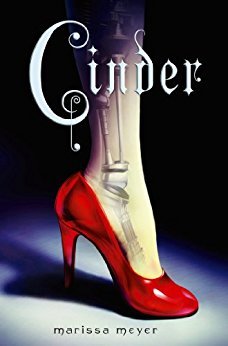
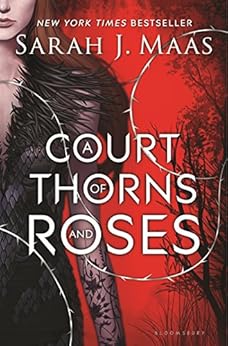
Stories in the retelling trend reimagine fairy tales for a modern audience. Retellings have existed for many years with the most famous being the stories by the Grimm Brothers and Disney (Hintz and Tribunella, 2013). Two examples of retellings are Cinder by Marissa Meyer and Court of Thorns and Roses by Sarah J. Maas.
        Cinder   
Cinder, the first installment of the Lunar Chronicles, introduces Cinder a teenage cyborg living in a futuristic world. Meyer’s retelling of the traditional Cinderella story is engaging and empowering. While the story is recognizable it is well masked by a dystopian world where technology abounds.
            The opening line of the book begins by stating “the screw through Cinder’s ankle had rusted, the engraved cross marks worn to a mangled circle” (Meyer, 2012, 3). The introduction signals to readers of the uniqueness of Cinder and distinguishes her from Cinderella.  Cinder does not work as a maid but as a mechanic becoming famous throughout the city for her work. As a cyborg and mechanic, Cinder challenges the many stereotypes presented in traditional fairy tales, complementing the feminist revisions discussed by Hintz and Tribunella (2013).
Cinder’s family fits the traditional view of a fairy tale family with a wicked stepmother and two stepsisters. Her stepmother is cruel and hates that she became the guardian of a cyborg even though Cinder is the one who earns the family’s money. One day while working she meets Prince Kai, who is seeking the best mechanic to fix his robot. Unlike in a traditional fairy tale, Cinder meets the prince not as a romantic interest but as a mechanic to help fix a problem.
Cinder is taken to be a test subject to help rid the world of a terrible disease, which her youngest stepsister has contracted. While at the clinic Cinder learns that she may be the only one able to save the Prince, Eastern Commonwealth and the world from the evil Queen Levana of Luna. When Cinder finally realizes this is true she rushes to save Kai from Levana but instead of the happy ending, Kai finds out she is a cyborg. After her failure at the Cinder runs away, but instead of losing a shoe she loses her too small foot. The unhappy ending is just the beginning of the tale as Meyer ends her first installment of the Lunar Chronicles.
Meyer has fashioned a world where elements of the traditional tale are recognizable, with homage paid to the Chinese roots of the Cinderella tale. Cinderella is no longer a slave waiting for her prince to come (as in the Disney version) or a powerless girl (as in other versions) but has become empowered to possibly save the world. She is gutsy and daring, taking risks to save the Prince.
Court of Thorns and Roses
In this retelling of the story of beauty and the beast, Sarah Maas empowers a young huntress, Feyre, allowing her to save two realms. Feyre is the youngest daughter of a fallen merchant lord.
Feyre earns the family’s meager income by hunting while her sisters and father sit at home.  Similar to traditional fairy tales the family lives in poverty, a reality in the time when the story is set.
Feyre on one of her hunting expeditions has ventured further from home to find a kill. She spots a deer but is not alone, a giant wolf has also spotted the prey. Choosing to kill the wolf, believed to be a fairy, changes her life forever. Feyre never questions magic knowing the wolf could be a fairy and acting normally and logically as she decides to kill him demonstrating the “immersive fantasy” theory of Mendlesohn (Hintz and Tribunella, 2013). 
The same night her life is changed forever with the appearance of a large beast at her home. When he demands her come with him or die, citing an old Treaty, Feyre chooses to go. This journey causes many changes and begins the story of beauty and the beast. At the fairy’s court Feyre learns that the terrible beast is actually a handsome fairy lord or High Fae.  She also discovers that the wolf was no beast but one of his men transformed to search out some kind of cure for a sickness harming the land. Maas has created a tale where the girl is not brought to protect her father or family but to help save the world she was trying to destroy because of hatred.
After months in Tamlin’s court Feyre begins to change, losing her hatred and gaining affection for him. The romance of many old fairy tales is referenced here, though with a modern style. In the end, Tamlin begins to fall for Feyre, choosing selflessly to send her home instead of allowing her to face the true evil in the land. Feyre cannot stand being away and returns to save Tamlin and the rest of Prythian with her sacrifice. Unlike other modern tales the couple receives a fairy tale ending because of the gratitude of the other fairy lords who each gives Feyre a bit of magic transforming her into a High Fae.
Maas has incorporated many different motifs from the original version and various other retellings. In older versions, the beauty is the youngest of three who goes to live with a beast for life to save her father. Another tale, the Polar Bear King, has a girl being taken by a great bear and she must learn to love him before he can become a man again. Maas’ story leaves questions as to who is truly beauty in the tale, Feyre kills someone out of spite and receives a transformation, similar to the beast in the fairy tale but Tamlin has the power to transform into a terrible beast outwardly and must be saved from a curse. This retelling empowers the beauty with the power to overcome the evil which has ruined the land and taken love away.
Quirky & Moving
            A second trend discussed by Parkin (2014) for 2015 is “Quirky and Moving,” these stories often contain “quirky characters, outlandish situations and serious topics…” (para. 15). The authors use realism to establish plausible, though sometimes outrageous, situations. These books often discuss subjects once viewed as taboo in literature (Hintz and Tribunella, 2013; Chance, 2014).
            Mosquitoland: A Novel
            In David Arnold’s Mosquitoland, the reader is introduced to an eclectic group of characters each with their own quirks and goals. The main character Mary Iris Malone, or Mim, is on a journey
to find her mother. Mim describes herself as “a collection of oddities, a circus of neurons and electrons…It sounds strange because it is, and it is, because I am strange” (Arnold, 41).
            Mim’s adventure is littered with dark events and tales told both in the form of a letter, to her yet unborn sister, and first-person narrative. Most of her tale, while showing a quirky side, would fall into the “Dark Modern Realistic Fiction” category established by Chance (2014).
The old woman is traveling alone with a box to meet her nephew and his boyfriend. An accident shows the darker side of realism with the death of Arlene, adding a sad element of reality to Mim’s story. Another dark element involves Poncho Man, he corners Mim in the bathroom and attempts to rape her. The attack fails because of one of Mim’s many self-proclaimed oddities, a displaced epiglottis. The discussions of these taboo subjects easily demonstrate the ideals presented by new realism and teens desire to read “fiction that spoke9s) to their immediate experiences” (Chance, 2014, 321).
The last two characters add a bit of light to the otherwise dreary trek. The handsome stranger turns out to be a college junior named Beck on a photography expedition. Mim finds him attractive and admits to caring for him, prompting him to leave in the end. The final character is Walter an autistic boy Mim encounters under and overpass. He reminds her of a friend from her past, and Mim decides to help him.
Mim’s story ends sadly with her finding her mother in a rehab facility. She must then reconcile with her stepmother and father. The story is relatable to teenagers whose parents have divorced or even those who still have both parents because of the use of realistic events. These events allow Arnold’s story to fit into the quirky and moving category presented by Parkin because Mim gets herself into some interesting situations.
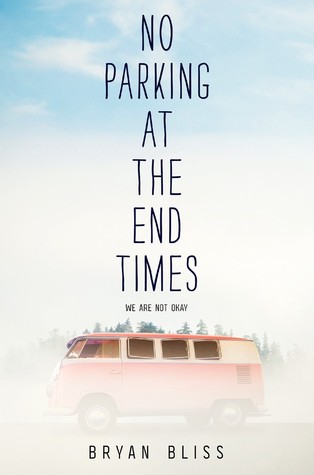
No Parking at the End Times: We are not Okay
A second example of the “Quirky and Moving” trend is Bryan Bliss’ No Parking at the End Times. Bliss tells the story of twins Aaron and Abigail, whose family has moved to California after their parents fall prey to the teachings of an eccentric religious teacher, Brother John. Their father lost his job and most of their money because he chose to believe that the end was near and Christ would come back on a specific date. When the Lord does not return the family is left devastated and
stranded in San Francisco.
Similar to Mosquitoland this book covers darker topics often found in modern realism. The topics covered fall into Chance’s (2014) category of “Street Violence, Drug Abuse and Homelessness” (71). Arnold presents the ways in which the twins handle their family’s situation each in their own way. Aaron by internalizing and withdrawing from the family and Abigail by trying to get their parents to see what is happening to them, both are realistic views of teens coping mechanisms.
Abigail is having trouble accepting the reality that her parents are truly not thinking about anything besides Brother John and his prophecies. Aaron, however, has decided that his parents do not care what happens to them and wishes to run away, after all, he sneaks out most nights and they do not even notice. Abigail tells how she has begun to miss home, using a series of flashbacks to recall happier times. Abigail sneaks out one night to find him but cannot and must return to their van. When she does find out she is not happy but accepts it because her brother is finally talking with her again. The following day everything seems to go well, except their parents still do not notice them.
A few days later both of them run away, Aaron first then Abigail because she feels left behind. When Abigail finds her brother, he is running out of the church with stolen money. They chose to split up to find one of their friends and buy tickets to go home. Aaron is beaten up while they are apart. The darkness of street violence is noted by the words of the paramedics who come to help Aaron, they call him a ‘street kid’ and do not seem to care (Bliss, 2015, 259). Abigail rushes to find her parents, creating a sense of hope that they will be rescued from the streets. Once she finds them it takes a few moments to convince them to go, especially her father who believes Brother John. However, the story ends on a happy note with the family in Aaron’s hospital room together knowing he will recover.
Bliss’ coverage of realistic events through strange situations places this book in the trend of “quirky and moving.” The book is moving because it shows the hardships faced by teens when their parents make poor decisions, which many can relate to. The realism in the book allows readers to relate to the characters and demonstrates the profound impact of this trend.
Conclusion
            Young adult books follow trends which change based on what teens want to read but they also shape what teens are reading. Retellings present fairy tales to a new audience, often with a modern twist as seen in Cinder. Court of Thorns and Roses presents an empowered heroine who saves the day instead of waiting for her prince. The books in the Quirky and Moving category display the darker side of teen fiction presenting real life situation that teen readers can relate to. Mosquitoland displays the effects of divorce on teens and how they can cope through their own means of escape. No Parking at the End Times discusses the various challenges faced by teens whose parents seem to forget them when making decisions. Each of the books provides a different aspect of the trend they represent and shape the story of teen literature.


References
Amazon. (2017). A court of thorns and roses Kindle editon [Image]. Retrieved from https://www.amazon.com/dp/B00OZP5VRS/ref=dp-kindle-redirect?_encoding=UTF8&btkr=1
Arnold, D. (2015). Mosquitoland: A novel. New York: Viking.
Bliss, B. (2015). No parking at the end times: We are not okay. New York: Greenwillow Books.
Chance, R. (2014). Young adult literature in action: A librarian’s guide (2nd Ed.). Santa Barbara, CA: Libraries Unlimited.
Goodreads. (2017a). Cinder (The lunar chronicles #1)[Image]. Retrieved from https://www.goodreads.com/book/show/36381037-cinder
Goodreads. (2017b). Mosquitoland by David Arnold [Image]. Retrived from https://www.goodreads.com/book/show/18718848-mosquitoland
Goodreads. (2017c). No parking at the end times [Image]. Retrived from https://www.goodreads.com/book/show/22403036-no-parking-at-the-end-times
Hintz, C., and Tribunella, E. L. (2013). Reading children’s literature: A critical introduction. Boston: Bedford/St. Martin’s.
Maas, S. J. (2015). Court of thorns and roses. [Kindle Edition]. New York: Blumsbury.
Meyer, Marissa. (2012). Cinder. New York: Feiwel and Friends.
Parkin, L. (2014). 4 ya book trends to look for in 2015. HuffPost Books. Retrieved from http://www.huffingtonpost.com/lisa-parkin/4-ya-book-trends-to-look-_b_5999458.html

7/17/17

A look at Graphic Novels

I just completed a Graphic Novels course for my MLIS at San Jose State University's iSchool for which I read 10 graphic novels. For each novel, I wrote an annotation and decided to share this information here. Below I have included my entire paper. Feel free to read it if you like.


I summarize the following ten novels (not in order):

  1. American Born Chinese by Gene Luen Yang
  2. A Contract with God by Will Eisner
  3. Maus by Art Spiegelman
  4. Persepolis by Marjane Satrapi
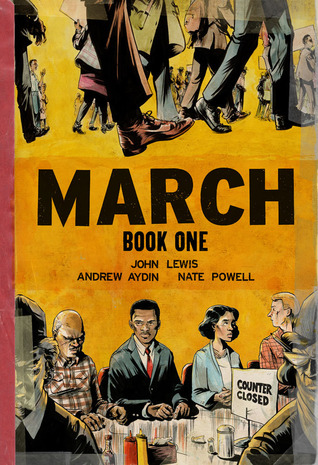
  5. March: Book One by John Lewis
  6. Safe Area Gorazde by Joe Sacco
  7. The Arrival by Shaun Tan
  8. The Property by Rutu Modan
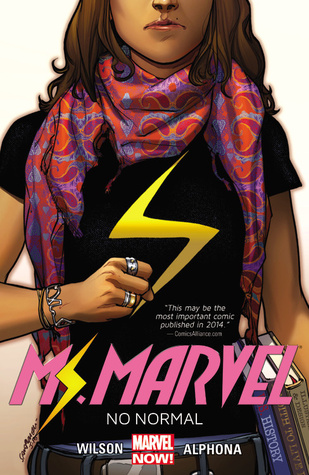
  9. Ms. Marvel: No Normal by G. Willow Wilson
  10. All-Star Superman Complete by Grant Morrison
The Arrival
From Goodreads
Tan, S. (2006). The arrival. New York: Arthur A. Levine Books.
Shaun Tan’s The Arrival is a brilliant wordless graphic novel sharing the tale of an immigrant in his new city after leaving his wife and daughter. Each panel shares the struggles of going to a new and strange world. The wordless nature brings attention to the fact that everyone speaks a different language, and yet they still can communicate. The communication takes place with drawings and gestures. Each new person which the immigrant meets has a unique story to tell of why they are in their new land. The story has strange animals and sights giving the world an unfamiliar feeling drawing readers into the story. Tan uses double-page spreads to tell his story, even having panels crossover both pages instead of the traditional single page spreads to tell his story. This book is a marvelous example of what a graphic novel can do using simple images. Tan’s book should be part of graphic novel canon and I would recommend the book to anyone interested in seeing the life of immigrants. This book is unique in that it is wordless but the fact that it is wordless adds to the beauty of the book and the story. Even without words readers are engaged and can understand what the characters are feeling. Tan’s book is a must read for anyone who enjoys graphic novels.

Maus
From Goodreads
 Spiegelman, A. (1986). Maus: A survivor’s tale: My father bleeds history. New York: Pantheon Books.
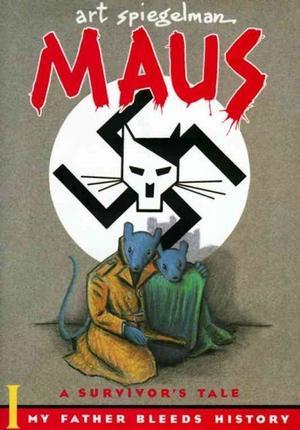
In Maus Spiegelman tells his father’s sad and moving story of surviving the Holocaust as a Polish Jew. Spiegelman uses animals to depict the characters in his narrative: Jews are mice (maus in German), Poles are pigs, and Germans are cats. This is fitting because just as cats hunt mice, the Germans were hunting the Jews. Maus is divided into six chapters, each telling one part of Vladeck (father) and Anja’s story. Each of these chapters has a skillfully drawn cover image with the title displayed. Maus shares not only Vladek’s story of how he and Anja survived WWII by hiding from the Gestapo but also the interactions of Vladeck and Arti (Spiegelman) while Spiegelman was recording the story for the book. The interjections share life as it is now, after the war, after Anja died, and after Art had grown and was living on his own. While the first narrative is heavy and dark, both in style and content, the second has elements of humor and levity. Spiegelman adds a third narrative into the story in Chapter 5 about his mother’s suicide and the effect it had on the family. These pages use dark backgrounds and more deliberate shading, also while the rest of the book uses animals to tell the story this inset uses people to share Anja’s story. Maus is a good read for those interested in learning about the effects of WWII from a Jewish perspective. Maus is a great addition to any graphic novel collection adding historic elements to the canon

Ms. Marvel: No Normal
From Goodreads
Wilson, G. W., and Alphona, A. (2015). Ms. Marvel: No normal. New York: Marvel.
            Ms. Marvel tells the story of Kamala, a Pakistani-American teen, trying to discover herself. Wilson’s writing is fast paced and exciting, pairing wonderfully with Alphona’s vibrant illustrations. Together they create a world where anything is possible if you believe; the way they create Kamala allows readers to understand and connect with her, making you believe everything that comes to pass. Kamala struggles with trying to be herself, which is difficult because she wishes to have her own way but must follow the strict religious and social boundaries established by her parents. Each section begins with a full-page image of Kamala as she masters her new-found powers.  Different sized panels tell the story, some panels are small insets within larger images, while other take up whole pages. The panels are arranged in a traditional manner, with some overlapping one another or covering the entire page width. Yellow text bubbles allow readers to view character’s thoughts and provide an internal narrative for the characters helping readers understand why they do something. Ms. Marvel is a well-written origin story with skillfully drawn images. Kamala like other heroes has a friend who she tells about her powers, but will not tell her family. Ms. Marvel provides a modern look at who can be a superhero by giving the graphic novel canon a new fresh image for female superheroes.

American Born Chinese
From Goodreads
 Yang, G. L. (2006). American born Chinese. New York: First Second Books.
            Yang’s beautifully illustrated volume tells the stories of Jin Wang, Danny, and the Monkey King. Jin is a young Chinese-American boy trying to fit in with his new classmates but is always reminded of being the outsider. While Danny is a teenage boy who has just begun to fit in at his new school (the third in three years), until his cousin, Chin-Kee, shows up. While Jin feels that he does not fit in Danny is embarrassed by his cousin and feels that everyone makes fun of him not because of who he is but who his cousin is. The final story is that of the Monkey King. Monkey desires to become a god, mastering all twelve aspects of Kung Fu to become immortal. In all three stories, the characters must learn the same lesson, to be themselves. Yang’s colorful illustrations accompany each story, all three stories are told in a similar style. The story of Chin-Kee has a unique feature, at the bottom of some panels Yang has placed the words “HA HA HA” or “CLAP” in bubble letters, this indicates to the readers the embarrassment Danny feels around his cousin. The words add a sense of uneasiness to the frames. Yang also uses slanted gutters which cut diagonally across the panels adding a sense of movement to the scenes not accomplished by traditional gutters. American Born Chinese is a fascinating read for anyone who feels out of place. The graphic novel belongs in the cannon and helps readers learn to be themselves.


March
From Goodreads

        Lewis, J., Aydin, A., and Powel, N. (2013). March: Book one.    Marietta, GA: Top Shelf Productions.
March: Book One is written by John Lewis and reflects on his work during the Civil Rights Movement. Lewis shares his experiences in a flashback tale with two boys and their mother on the day of President Obama’s inauguration. The first story Lewis shares is about how he grew up on a farm helping raise the chickens, in this story we see his compassion and humanity. The second story tells of how Lewis gained interest in helping African-Americans gain equality and justice. He tells of how his favorite uncle arranged for him to take a trip to the North for the summer, where he saw the difference in how African-Americans were treated there. The reader is shown how Lewis joined the movement and met Dr. Martin Luther King because of a desire to help desegregate a university near his home. While that did not happen John Lewis would become an integral part of the sit-in in Nashville as a member of The Nashville Student Movement. The black and white drawings bring a somber tone, showing the importance of what was taking place during the Civil Rights Movement. Each panel deliberately shows emotions of the characters in the story. The panels are unique with some having only two borders with others having no borders. These different shaped panels add to the story and show the passage of time or action. The novel belongs in the canon playing an important part in telling the history of the American Civil Rights Movement.

A Contract with God
Eisner, W. (2006). A contract with God: A novel. New York: W.W. Norton.
From Goodreads
            In this graphic novel, Will Eisner tells four gritty real-to-life stories about living in the tenements of the Bronx. The first story is where the book receives its name, in this tale Frimme Hersh believes he has a contract with God entitling him to only receive good things. When he loses Rachel, his daughter, he breaks this contract and his life seemingly improves. However, in the end, only God benefits. The second story, “The Street Singer,” recounts a possible life of one of many men who sang in the alleys for money during the great depression. “The Supper” details the sad life and death of the building Super, Mr. Scuggs. Mr. Scuggs is feared and ultimately this (and his lust for women) leads to his suicide. The final section, “Cookalein,” tells the devastating stories of a family, a woman, and a man. The family has problems, notably, the father has a mistress. The woman, Goldie, seeks a husband only to be tricked and rapped, by the man, Benny. These sad tales show the reality of living in a tenement, like the one at 55 Dropsie Avenue. Eisner employs many different types of panels, often without borders or set gutters. The images and words run together to tell the flowing stories. The dark ink lines share the grim stories in a beautiful way. As what is considered the first graphic novel A Contract with God gives readers a glimpse into the beginnings of the medium.

All-Star Superman
From Goodreads
 Morrison, G., and Quitely, F. (2011). All-star Superman [Digital Edition]. New York: DC Comics. Retrieved from https://www.hoopladigital.com/play/11356792
            In All-Star Superman readers are introduced to the “human” side of Superman seeing his mortality. Morrison’s reimagined Superman is powerful and compassionate. The twelve-episode story tells how Superman is dying from solar poisoning. Lex Luthor is the cause of all the trouble for both Earth and Superman because he does not want to die for the crimes he committed. The story explores what a world without Superman would look like and how he might save himself. Each story adds to the life he led as Clark Kent and Superman. Quitely’s art is vibrant and action filled, enhancing the story told by Morrison. Each panel is skillfully drawn to engage the reader with the story. The first three stories each have small inset panels to begin the episode, while the remaining nine only have the full-page images. One unique panel set is in Episode 5 where the bottom middle panels open into the gutter creating a background. This overlap into the gutter creates a larger flow for the characters in the jail scene and readers feel as if they are part of the crowd. All-Star Superman is an exciting twelve-part adventure with Superman and those he meets. The story is well told and even those who do not know the origin story can relate to it, feeling attached to the characters. The art adds to this attachment allowing readers to use closure to fill in many gaps and enhance the story. This graphic novel provides the cannon with a delightful superhero adventure.

Persepolis
From Goodreads
 Satrapi, M. (2003). Persepolis: The story of a childhood. (M. Rippa and B. Ferris, Trans.) New York: Pantheon.
            This graphic memoir shares Satrapi’s story of growing up during the time of unrest in her homeland. The dark ink illustrations show the mood of the time, fear. Each panel is filled with suspense and secrecy. Satrapi relies on closure from the readers to keep the story moving and to fill in the more gruesome details. The text tells the story in both word bubbles and text boxes along the top and bottom of panels. Though only 153 pages long this book spans many years and difficulties for Satrapi, her family, and her friends. Each chapter opens memories of darker times starting with the Revolt and ending with Marji leaving for Austria alone. The graphic novel shares the poverty, fear, massacres, and danger facing the people of Iran during the change in power from the King to the Shah and finally the Islamic Republic. The author shares how the media would twist stories to try and gain the people's trust all while the government was killing their own people who disagreed with them. Persepolis tells an important part of history and helps those who are not familiar with the fight in Iran/Middle East better understand what the people are struggling with every day. This graphic novel also is relatable to many people, because Marji is a typical rebellious teenager, making her a familiar and accessible character. The sad truth of the story is seen in most chapters making the content difficult to read at times but important to understand. Persepolis is a well written and illustrated memoir which belongs in the cannon of great graphic novels.

The Property
From Goodreads
 Modan, R. (2013). The property. (J. Cohen, Trans.). New York: Drawn & Quarterly.
            The Property tells the story of a grandmother and granddaughter who return to Warsaw in search of their property. The vibrant colors of the illustrations dramatize the story from the perspective of both characters drawing readers into their lives. In Warsaw, Regina seeks out an old flame, from before the war, because of a secret they share which Mica does not know. Mica meets a young man who gives tours of the Jewish section of town and begins to fall for him, even though he is not Jewish. Intermixed with these two stories is the story of Yagodnik, a family friend, who is trying to take the property for Regina’s daughter (Tzilla). The story has been translated into English but indicates which language is being spoken with the font used for the words. Hebrew is shown with all caps, while Polish is italicized, and English is in mixed (standard) type, a fourth type of speech bubble has only squiggles representing when a character is hearing an unknown language. This feature allows the readers to understand the situation from a specific character’s perspective and makes them more relatable. One unique panel sequence is during Day 3 when Mica is speaking with a lawyer and Yagodnik is speaking with Tzilla. This three-page set of panels uses a burgundy background for Mica and a basketball setting for Tzilla to show the two separate conversations. The Property is a stunning example of a historical graphic novel and provides a unique perspective on Jews returning to Poland long after World War II.

Safe Area Gorazde
From Goodreads
Sacco, J. (2000). Safe area Gorazde: The war in eastern Bosnia 1992-95. Seattle, WA: Fantagraphics Books.
            Sacco recounts his time visiting Gorazde during the Bosnian war as a journalist and the friends he makes while there. The war isolated and nearly destroyed the city of Gorazde during the heat of the war. The sad stories of the citizens are recounted in somber tones and dark black ink. The illustrations and text tell a story of the horrors seen by the survivors of the firefights with the Serbs. Sacco uses different colored gutters to show the story from his perspective (white) or that of the survivors (black). The black gutters appear to represent the dark times they have seen. Another unique feature of the graphic novel is the mix of text boxes and word bubbles to tell the story. Textboxes show the narration provided by Sacco, while bubbles show the dialogue of characters in each frame. This sad story is important for all to understand so that there is not a repeat of this horrible war. The graphic novel shows the impact that the war had on the citizens of the country and city, even after there was peace declared. The men and women represented are uncertain of their future and hope for a better life. The novel should be in the canon, even though I did not enjoy it because it tells an important story and represents a unique style and perspective.

Credits: All cover images are from Goodreads.com posts, each annotation begins with an APA citation crediting the author(s) and/or illustrator(s).

UPDATE: This blog post was edited and reposted to include credits line and correct Satrapi's name. Reformatted to include book title headings.