5/30/17

Another Blog: Illustrator Study

Well for most of this month I have been tied up working on final class projects. Two were blogs and the third a paper. I will be showcasing my Illustrator Study in this post. For the study, I looked at the work of two children's book author/illustrators.

I enjoyed working on the project for my Materials for Children class (INFO 263) at San Jose State University (SJSU) where I am completing my Master of Library and Information Science. I will have the degree completed, hopefully, this coming December (2017).

Blog Homepage
Retrieved from http://2017illustratorblogmartininfo263-10.weebly.com/
The above image is the first page of my project "blog" or I should say website. I provide information abut the two authors, Jan Brett and Rober Sabuda.
Screen Shot of Comparing Illustrators

Part of the Project included comparing the two illustrators styles. For this, I created the below image comparison and chart comparing their work/influences. This information is found on the website in more detail.


The above chart shows the information from the research I completed for the website and each illustrator. I found the similarities and differences fascinating. One similar influence was both were encouraged by their moms.  

This information and more can be found on the website for those who are interested in learning more about the two illustrators. Along with information about there is a brief bibliography of works for each illustrator including books written by each.

To view the whole project you can go to:

http://2017illustratorblogmartininfo263-10.weebly.com/

This will take you to the home page of my website where you can explore the information I have collected.

This is a finished project and will not be updated.

References (for the comparion chart)
Augustine, K. (2015). Stitching with paint: Inside the world of Jan Brett. Piecework, 23(5_, 16-19. Retrieved from http://libaccess.sjlibrary.org/login?url=http://search.ebscohost.com/login.aspx?direct=true&db=ofm&AN=108673068&site=ehost-live&scope=site

Best Pop-Up Books. (2016). Robert Sabuda, paper magician (interview) [Header images]. Retrieved from http://www.bestpopupbooks.com/interview-robert-sabuda/


Brett, J. (2013, July 10). July 2013 hedge a gram (Web log comment) [Header image]. Retrieved from http://janbrettsblog.com/?m=201307


Brett, J. (2016, Jan. 4). January hedge a gram (Web log comment) [Header image]. Retrieved from http://janbrettsblog.com/?m=201601


Norton, D. E. (2011). Through the eyes of an artist: Robert Sabuda. In D. E. Norton (ED.), Through the Eyes of a Child: An Introduction to Children’s Literature (24). Boston: Pearson.


Sabuda, R. (2017a). About Robert. Retrieved from http://wp.robertsabuda.com/about-robert/


Sabuda, R. (2017). Pop-up Questions. Retrieved from http://wp.robertsabuda.com/pop-up-questions/


Scholastic. (2017). Jan Brett & her studio [Video]. Retrieved from http://www.scholastic.com/teacher/videos/teacher-videos.htm#3295495837001/ 1288060533001


Winner, M. (Host). (2016, November 26). Robert Sabuda: All the wonders, episode 308 [Audio podcast]. Retrieved from http://www.allthewonders.com/podcasts/robert-sabuda-all-the-wonders-episode-308/  


4/20/17

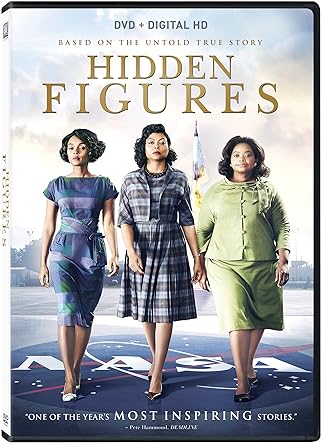
Hidden Figures [Movie Review]

Introduction
In February, I read and reviewed the book Hidden Figures by Margot Lee Shetterly. The review can be read here. I truly enjoyed the book and have finally seen the movie (about a week ago) based on the same story, also titled Hidden Figures.
Review
The movie begins in 1961at the beginning of the space race when NACA (National Advisory Committee for Aeronautics) becomes NASA (Nation Aeronautics and Space Administration), some years after the start of the book. This is about chapter 16 in Shetterly's book retelling the story of the "colored computers" at Langley Air Base. The movie was full of information about three of the women, Katherine Johnson, Mary Jackson, and Dorthey Vaughan. (I explain more in-depth about them in my book review).

Readers of the book will find that the movie brings the book to life. One situation, in particular, was difficult to imagine, in which Katherine had in finding a "colored" bathroom. She is shown running across the campus carrying her stack of files and work just to simply “relieve” herself. While this was noted in the book it did not sink in until I saw the movie, nd the big scene which her boss made over here being gone for 40 minutes a day. Dorthey is seen seeking advancement which seems hindered at every turn until she looks to the future and becomes the first supervisor for the new IBM machine. Mary appears to have the easiest time, though she is the only one with a legal case to enter the all-white high school building for night classes. The movie made what these women did truly amazing, especially Katherine (who most of the movie is focused on).

Another aspect which impressed me was the way they could do math, the computers where
completing complex calculations in their heads with little assistance from machines, if they had one it was an adding machine. Catherine was shown to be faster and more reliable than the new machine. This was not lost on John Glen when needing last minute calculations done. Matt Blitz (2017) states explains that the scene with Katherine requesting to enter a briefing shows the need of many organizations of the time to break down prejudice. About Stafford’s reply to Katherine of “There’s no protocol for women attending” to which one of Johnson’s most remembered lines of “There’s no protocol for a man circling Earth either, sir.” Blitz says that it “underlines this based-on-a-true-story movie. He is sharing that the quote embodies much of what the movie is about, as well as the story. While this is monumental and easily pointed to, what caught my attention was the respect which John Glen (portrayed by Glen Powell) included the women, especially the African-Americans in the conversation. When the Mercury 7 arrived at the base for training he notices them standing apart
from the crowd and instead of leaving, as the heads want him to, he chooses to go and say hello and shake their hands (specifically Dorothy, Katherine, and Mary), something unheard of in the South at the time. White men did not speak, let alone shake hands, with African-American women, but he did. This brief scene along with a few others shows a contrast in the ideas of north and south. Not all people are bad or stuck in their ways. The movie brought these out more clearly because of the visual elements that text does not convey.

Overall, this is a beautiful example of historic biography. Many of the elements were unknown before and are brining light not only to African-American's at NASA early on but also to women who worked on the numbers. The honor given only to white men for reaching the moon truly belongs to all those who engineered, calculated, and designed during the early years at NACA and NASA.


Hidden Figures Website: http://www.hiddenfigures.com/
On this website, you can find information about both the movie and the book

Search for Hidden Figures Website (Movie Page) https://searchforhiddenfigures.com/the-movie/

20th Century Fox Movie Website

Read others like Hidden Figures

If you enjoyed Hidden Figures Library Journal has compiled a list of other books to read about women in STEM fields and others who overcame great odds to do what they love.

References

20th Century Fox. (2016, August 14). Hidden figures: Teaser trailer [HD] 20th Century FOX [YouTube Video]. Retrieved from https://www.youtube.com/watch?v=RK8xHq6dfAo&index=330&list=WL

Blitz, M. (2017). The true story of ‘Hidden Figures’ and the women who crunched the numbers for NASA: While telling the story of three unknown space heroes, Hidden Figures, also reveals a greater truth about NASA.  Popular Mechanics Goes to the Movies. Retrieved from http://www.popularmechanics.com/space/rockets/a24429/hidden-figures-real-story-nasa-women-computers/

Kundu, S. (2017). Review: Hidden figures [Still Image]. Retrieved from http://standardissuemagazine.com/arts/review-hidden-figures/ 

Shetterly, M. L. (2016). Hidden figures: The American dream and the untold story of the black women mathematicians who helped win the space race. [Kindle Edition]. William Morrow.

Melfi, T. (Director). (2017). Hidden Figures [Motion picture]. United States: 21st Century Fox.


4/14/17

Knuffle Bunny: A Cautionary Tale [Book Review/Information]

Introduction

This is a post I made for a group blog project from my MLIS at SJSU but was unable to use on that particular blog, so  I'm posting it here.

You can find the other blog posts at http://top100childrensbooks.weebly.com/ 
The authors are myself, Julia Christy, Angela Flock, Rachael Parlier, Sarah Zaharako. We worked on the blog for a class project.

So after all that here is my unused post for Knuffle Bunny by Mo Willems.

MO WILLEMS' KNUFFLE BUNNY: A CAUTIONARY TALE


Willems, M. Knuffle Bunny: A Cautionary Tale. Hyperion Books for Children, 2004. 32 pgs. HC $15.99 ISBN 978-0-7868-187-9.

Summary
Trixie and Daddy are running an errand to the laundromat. On the way home Trixie realizes something is wrong, Knuffle Bunny is missing!

Age Range: 3-8 years old

Awards Won: SLJ’s Top 100 Picture Books (2012), Caldecott Honor Book (2005).


Review
Willems provides a story full of action and that many children can relate to. Most children have a cherished toy, that when misplaced causes great distress, just as losing Knuffle Bunny did for Trixie. Publisher’s Weekly (2004) discusses the unique images Willems produces by combining photography and hand-drawn images. They state that “in an innovative style…employs dappled black-and-white photographs of Brooklyn as the backdrop to wickedly funny color cartoons, Willems..creates an entertaining story for parents and children alike” (Publisher's Weekly, 2004). 

Themes
Family
Adventure
Toys
Growing Up

Series Information
KNUFFLE BUNNY
1. Knuffle Bunny: A Cautionary Tale
2. Knuffle Bunny: A Case of Mistaken Identity
3. Knuffle Bunny: A Unexpected Diversion

Application
Teachers, librarians, and parents can use this book to discuss how to handle misunderstandings. As the book is read children can look at the ways in which Daddy, Mommy and Trixie communicate. The book is also a great start to a discussion of children’s favorite toys. For more great applications see the teacher’s guide listed in the Other Resources section (Pigeon Presents, n.d.).

Read-alikes
Crum, S. (20011). Mine! From Good Reads.
Pett, M. (2013). The Boy and the Airplane. From Good Reads.
Raschka, C. (2011). A Ball for Daisy. From Good Reads.


Author Official Website: http://www.mowillems.com/

Other Resources
Knuffle Bunny: Teacher’s Guide http://www.pigeonpresents.com/teachersguides/knuffle_teachguide.pdf

References 

Mayra Cutinhola Figo (User name). (June 7, 2016).  Acting out the story - Knuffle Bunny - 1º ano A [YouTube Video]. Retrieved from https://www.youtube.com/watch?v=z5WzQ9KqsBY

Knuffle Bunny [Cover Image]. (2004). Retrieved from http://www.pigeonpresents.com/book-info.aspx?bid=18

Pigeon Presents. (n.d.) Knuffle bunny: Teacher’s Guide. Hyperion Books for Children. Retrieved from http://www.pigeonpresents.com/teachersguides/knuffle_teachguide.pdf

Publishers Weekly. (2004). Knuffle bunny: A cautionary tale. Retrieved from http://www.publishersweekly.com/978-0-7868-1870-9


3/26/17

Roll of Thunder, Hear My Cry [Book Review]

Roll of Thunder, Hear My Cry is part of a series by Mildred D. Taylor about the Logan family’s struggle against prejudice and racism in the South following the Civil War during the time of Jim Crow laws. In Roll of Thunder, Hear My Cry the family is struggling, as are many, during the Great Depression. Pa works on the railroad, away from the family for most of the year, Ma works as a school teacher, and Big Ma (grandma) helps run the farm. The four children attend an all-Black school where they must walk miles in the rain, mud, etc. to get to school instead of riding a bus as the white children do. The nine-year-old girl, Cassie, is the main protagonist. She is upset by all that is happening around her, which often leads her into trouble. The story is born out of the author’s families tales and lives, Taylor states

[b]y the fireside in our northern home or in the South…I learned a history not then written in books but one passed from generation to generation…a history of great-grandparents and of slavery and of the days following slavery: of those who lived still not free, yet who would not let their spirits be enslaved (viii).

The story has an important message to tell with well-written characters and a well-established setting. Taylor creates a world where the reader is transported back to the South during the Great Depression, to a time of sharecroppers/tenant farmers and cotton fields. Times were tough for everyone and life was especially hard for African-Americans. One caution, Taylor uses the language of the times, which makes for a realistic world but can offend many who do not understand. This book provides insight into a world that was harsh and explains many reasons for prejudice which still exists today. Unlike Hidden Figures, this book does not have a particularly happy ending. Roll of Thunder, Hear My Cry is not a feel-good book or showing that you can overcome prejudice, it shows the harsh realities of the world as they were and are.

Mildred D. Taylor
Taylor’s storytelling is great; however, the ending comes suddenly with an unexpected twist. This book follows the family’s life as the struggle to keep their land and refuses to be bullied by the local white land owners. The book has a good structure with a good solid introduction to the characters, even though the storyline is a bit slow. The content of the book is worthwhile, just not a book that I prefer. The books main struggle and climax do not occur until the last few chapters. This adds intrigue but after reading so much that was going well for the family the end is depressing, as was the time this book was set. The end showed hope until the last few lines where you see that it does not turn out as it should have. I enjoyed reading the book and know the reality and that the ending is very realistic but was not sucked into the story until the last two chapters when most of the action happened. Overall, this book is a good read for those seeking to know more about the past but should be read with caution to younger readers.


References

Taylor, M. D. (1976). Roll of Thunder, Hear My Cry. Bantam Books. New York.


3/4/17

Death's Mistress [Book Review]

I enjoyed Terry Goodkind’s “Sword of Truth” series, as well as the following series centered Richard and Kahlan, so I had high hopes for Death’s Mistress: Sister of Darkness, even though Nicci was never a favorite character but was well developed with an interesting story. 

The book is full of action like the other two series and promises much. Goodkind does tell a good story but seems to rely heavily on reminding readers that this is just a continuation of Richard’s story, never letting Nicci come fully into her own.
The book is not centered around Richard and Kahlan, as the other books set in the world of Dahra, but focuses on two Old World characters. Nicci, the titular character, a sorceress who once lived at the Palace of the Prophets and was a sister of the dark turned into Death’s Mistress by the Emperor Jagang; having seen the light with the help of Richard she now serves him with all her being. The second character is Wizard Nathan Rahl, an ancestor of Richard’s, he was once a prophet but now must face a world without prophecy thanks to the star shift Richard caused.
Nicci and Nathan encounter others along their journey to explore the world for Lord Rahl and tell others about the new Empire and benevolent ruler. Nicci secretly only took the assignment to be away from Kahlan and Richard but is that the only thing there is for her to do. Nathan, after spending hundreds of years cooped up in the Palace of the Prophets, is eager for an adventure like the ones he wrote about. So, the unlikely pair begin their journey in the Dark Lands, newly conquered in the Warheart (Goodkind’s book directly before this one). First, they go see Red, a witch woman, where they find a prophecy (though it has been removed from the world).
Future and Fate depend on both the journey and the destination. Kol Adair lies far to the south in the Old World. From there, the Wizard will behold what he needs to make himself whole again. And the Sorceress must save the world. (Goodkind, 23, 27).
This prophecy lead them on a journey to find answers and see new places.

The story is told from a third person all-knowing narrator’s perspective, as were the previous books set in this world. Goodkind is an excellent story teller making his readers want to keep reading and find what comes in the end, however the story-line itself leaves something to be desired. Each of the characters is well crafted and understandable, even those who are only in the story for a few short pages. There are some scenes which I believe were unnecessarily detailed (or glossed over for the 'effect' of a battle/love intrest) and did not actually move along the story. In a review by Publisher’s Weekly the review writes, “Goodkind’s name guarantees an audience, but they’ll find this installment unsatisfying” (Galen, 2017, par. 1). The last few chapters of the book feel additional, or the beginning of a new book, instead of giving the characters the time to relish their victory, they are immediately sent on a new quest, this time to truly “save the world.” I agree with the review I did pick up the book simply because I knew the world and Goodkind’s name, however I am uncertain if I would read any more in the series. The ending leaves me disappointed and wanting to change it instead of hopping for more. I preferred the part that I thought was the first ending, after they first “saved” the world from the main enemy of the book. But no, Nicci and Nathan could not have a happy ending with little loss, this was simply not to be and they were going to be sent on another quest that would leave them broken and with many more questions.

References

Galen, R. (2017). Death’s mistress: The Nicci chronicles, book 1. Publisher’s Weekly. Retrieved from http://www.publishersweekly.com/978-0-7653-8821-6


Goodkind, T. (2017). Death’s mistress: A novel from the Nicci chronicles. Tor Books.

Book image from Goodreads. Retrived from https://images.gr-assets.com/books/1465894004l/29939366.jpg 


2/18/17

Hidden Figures by Margot Lee Shetterly (Book Review & Summary)

Introducing the women who helped men reach the moon. In Hidden Figures: The American Dream and the Untold Story of the Black Women Mathematicians Who Helped Win the Space Race, Margot Lee Shetterly (2016) shares incidents in the lives of the West Computers at Langley Air Field.

The women saw the NACA through the Second World War and the birth of NASA. The author creates a connection to each of the characters through stories not only of their work lives but also personal stories. She grew up in Hampton around many of these courageous African American women. Each of the women came to NACA in a time of racial unrest and segregation to find a home behind the men fighting for the top. The women are amazing Mathematicians in their own right and some would become the first women among engineers. These women were not only making strides for women or African Americans but both into a field that was dominated by white men. America can thank many of the women for their hard work on aerospace computations in helping the first man to land on the moon.

Shetterly tells the story of many of the “hidden figures” of NACA, now known as NASA. In her Acknowledgements Shetterly (2016) states “The title of this book is something of a misnomer. This history that has come together in these pages wasn’t so much hidden as unseen…” (267). Shetterly uses a narrative style to share the lives of the women of West Computing and NASA both in the office and at home in their community. Many of the women had as much or more education than men hired during WWII and after yet still would not see the rank of engineer for many years to come.

The Women
One of the women shared is Dorothy Hoover, a professional engineer during a time when the profession was mostly male and white. She was one of the first to break into the field. 

Dorothy "Dot" Vaughan
Dorothy “Dot” Vaughan was the supervisor of the West Computers for many years and retired from NASA following the moon landing. 

Mary Jackson was another who entered as a temporary computer and rose through the ranks to work with Emma Jean Landrum a prominent white female engineer. The two of them helped to share the field with young women, showing how that African American and white women could both succeed at NASA together. 

Christine Darden, another African American computer, rose through the ranks after speaking with her supervisor over unfair promotions of men. She went on to author the code for “sonic boom minimization programs that aerodynamicists use today” (Shetterly, 2016, 262).
Katherine 1966

The woman who I found to be impressive was Katherine Coleman Goble Johnson. She was well known for her computation and math skills writing the orbital trajectory for John Glenn’s flight (Shetterly, 2016, 264). She was often seen around Langley and was John Glenn actually requested that Katherine (or the girl) work over the numbers from the IBM computer to make sure they were accurate.

Shetterly ends the book shortly after NASA reached the moon and discusses what the women went on to accomplish following their work on the project. Most retired from NASA and Langley after a few more years. Others were just beginning their careers. Each contributed much to the world of aeronautics. But not only this there were many more women both mentioned in the book and unseen that helped women today become engineers and scientists. 

One of these women was Gloria Champine who worked with Mary Jackson in working for equal opportunities for women at Langley, regardless of race. Gloria was there to help Christine Darden push for her promotion that would lead to her writing of the sonic boom code.

Opinion
While not one for science (I do have a love for history), I enjoyed reading Hidden Figures and found myself feeling as if I knew the women in the book. Shetterly did a marvelous job sharing the lives of these women with the world. She helps the reader she just how many people were overlooked in the story of the Space Race. Her style while some have called dry or like a history textbook, was anything but. I felt that I was reading a novel and while there were times when the book was dry or loaded with technical jargon, the author added moments of family life and reality of living during a time of Jim Crow and segregation. Shetterly’s style shows the grim reality alongside the excitement of having a career that you love.

UPDATE: Additional information from Smithsonian.com written by Maya Wei-Haas can be found at http://www.smithsonianmag.com/history/forgotten-black-women-mathematicians-who-helped-win-wars-and-send-astronauts-space-180960393/ 

References

Shetterly, M. L. (2016). Hidden figures: The American dream and the untold story of the black women mathematicians who helped win the space race. [Kindle Edition]. William Morrow.

Hidden Figures image from goodreads.com

Image of Katherine Johnson 1966 from Wikipedia. Retrieved from  https://en.wikipedia.org/wiki/Katherine_Johnson 

Image of Dorothy Vaughan from IBM Uncovers. Retrieved from https://www.ibm.com/thought-leadership/hidden-figures/images/dorothy-vaughan.png

Welcome!

Books are a wonderful way to have fun and find adventure in the comfort of your own home.


Open book with middle pages folded to look like a heart


 I created this blog to share my opinions of books, both old and new. Many of them will be my favorites. I had the desire to start this while working on assignments for my MLIS (Masters of Library and Information Science) at San Jose State University. I have a passion for reading, as well as for helping others find a perfect book. I hope to one day be a full-time librarian. This blog will give me a place to share my passion for books with all who choose to read it. I found that I enjoy reviewing books through my many assignments at SJSU over the past two years. I hope that you will find some exciting and interesting information here. 


Go and have an adventure with a book today! 


Image from flcker.