11/18/17

The Beast Within: A Tale of Beauty's Prince (Villains) [Summary/Review]


A unique view from inside the mind of the Prince from Disney’s Beauty and the Beast. I have to start by saying I will be comparing this with the original animated Disney version, I have not seen the newest movie. While intriguing and an easy read this book raises many questions. Serena Valentino begins with the Prince being grown and having a best friend who is the character typical viewed as the villain Gaston. This twist and choice of adding the Beast to the Villains series of books raise questions for me.

In this version of the Beast’s tale, he is in love with a young woman named Circe and they are to be married. However, things go terribly wrong for him when his “friend,” Gaston, mentions that she is a farmer’s daughter. The story from the opening scene of the 1991 movie is then mentioned though with different intent. Instead of it simply being a fairy the book explains that Circe is not only a woman but a powerful fairy. This leads to her vindictive curse on the Prince who must find love.

I did enjoy seeing the Beast’s perspective on many of the events in the classic (1991) film, though he still lacked a name. Yes, I have heard it’s Adam but the name is never mentioned in the book, by either his friends or betrothed. The prince does eventually find one who loves him, before Belle, but he does not love her or see her beyond a way to break the curse. The story is intriguing but since I was expecting to find out more about the Prince himself not just his time as the Beast, seems like a missed opportunity.

Finding the Beast to be the villain of this book seems odd because in the original he becomes the anti-hero though still having horrible choices he does come out good in the end. I had never considered this nor am I convinced that he was the monster, especially considering the time he lived; he simply followed custom men of his status did not marry for love and especially not peasants. Learning to love is easily seen in this one reads of his transformation from his first sight of Belle, at a ball before he is cursed, to when Belle finally declares she loves him in the end.

Overall, I enjoyed the book and would encourage Disney fans to read it, just know it has interesting twists. Also, don’t try doing the math from the movie, especially since in the song “Be Our Guest” it's stated they were cursed for 10 years because then things just get weird with this story. Take it as it is a fun read and enjoy!

References

Amazon. (2017). Beast Within, The: A Tale of Beauty's Prince (Villains) Kindle Edition [Image]. Retrieved from https://smile.amazon.com/Beast-Within-Beautys-Prince-Villains-ebook/dp/B00LOYVGL8/ref=sr_1_1?ie=UTF8&qid=1510466440&sr=8-1&keywords=beast+within+book

Maverick, J. (2016). Beauty and the Beast (1991) scene: ‘The curse’/opening sequence [YouTube video]. Retrieved from https://www.youtube.com/watch?v=7fEbW568CZo


Valentino, S. (2014). The beast within: A tale of Beauty’s prince [Kindle version]. Glendale, CA: Disney Enterprises.

11/1/17

Rhett & Link's Book of Mythicality: Review


Screenshot from Kindle Fire

Yes, I enjoy watching Rhett and Link. I stumbled upon them one day while on YouTube and was excited to watch. I enjoy watching their daily talk show Good Mythical Morning. When they announced their book, well I went and bought it, pre-order to get the exciting prize pack.

Also a few months ago I wrote a brief review about their Booklet of Mythicality: the preview for this book!

Rhett & Link’s book is a fun-filled adventure on the journey to mythicality. They define mythicality as “the quality or state of being that embodies a synergistic coalescence of curiosity, creativity, and tomfoolery (sometimes referred to as curiostomfoolity), ideally experienced in the context of friendship and intended to bring goodwill to the universe” (McLaughlin and Neal, 2017, 68). Rhett & Link are two internetainers (yes they enjoy making up words, it’s part of mythicality for them). The two have been friends since first grade and still enjoy being together! #friendgoals

Now that we know what mythicality is let me tell you about this book, it is packed with crazy stories, games, and even mythical merit badges! Each chapter details a different aspect of mythicality. I will not detail each section in this review but let me tell you there are great! (If you couldn’t tell from all the !!!!!). I thoroughly enjoyed reading this book in my very small amount of spare time, like you know last month I didn’t rea much and this book took me almost a month to read.

My Completion Photo!
They write in a single voice for the narration with each interjecting stories and it feels like a conversation with the two of them, each telling parts of the same story or different ones about each aspect of mythicality. The twenty chapters are full of images and exciting ideas, the writing style is fun and well mythical. Rhett & Link’s style shows thorugh, those familiar with them will understand and if you don’t know them well you should check them out on YouTube. My favorite chapters (if I had to choose) would be chapter two “Get Lost” and “Stop and Celebrate.” One of my college roommates and I got lost, for real one time, and called it an adventure. I still take these “adventures” with my sister every now and again, it makes it a lot less scary and more fun! I enjoyed reading the “Stop and Celebrate” chapter because this is something I have difficulty with. Rhett & Link state “[i]t’s easy to get caught up in your responsibilities…” (3300). Their reminder “…that it’s perfectly OK—even recommended—to take time to reflect on personal achievement” is just what I needed as I finish my MLIS degree. I rarely took time out when I finished High School, BA, Credential or got my first job…Well maybe I will try something, even if it is simply an ice cream from our local burger joint.

To see all of the crazy antics in this book and to learn about mythicality yourself check out Rhett & Link! Use the Good Mythical Morning link or search Rhett & Link on YouTube.

References

McLaughlin, R. & Neal, L. (2017). Rhett & Link’s book of mythicality [Kindle edition]. New York: Penguin Random House. 

10/21/17

YA Trends: Retellings and Quirky & Moving

So, the past two weeks have been busy. I have not finished a new book in about a month because of my school work. I am working on my final portfolio and collecting materials for it. Along the way I came across this paper about Trends in YA (Young Adult) Literature. Below is the body of this paper about the books in two trends from 2016. The trends are Retellings, fairy tales told for the modern audience, and quirky & moving. The trends are from an article by Lisa Parkin (2014). Hope you enjoy!
Introduction
            Lisa Parkin (2014) discusses four trends for young adult books in the year 2015. These trends include “Retellings” and “Quirky and Moving.” Each trend is defined by specific books, this paper will discuss two from each trend.
 Retellings
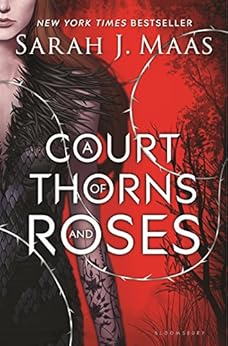
Stories in the retelling trend reimagine fairy tales for a modern audience. Retellings have existed for many years with the most famous being the stories by the Grimm Brothers and Disney (Hintz and Tribunella, 2013). Two examples of retellings are Cinder by Marissa Meyer and Court of Thorns and Roses by Sarah J. Maas.
        Cinder   
Cinder, the first installment of the Lunar Chronicles, introduces Cinder a teenage cyborg living in a futuristic world. Meyer’s retelling of the traditional Cinderella story is engaging and empowering. While the story is recognizable it is well masked by a dystopian world where technology abounds.
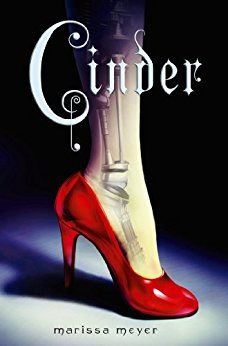
            The opening line of the book begins by stating “the screw through Cinder’s ankle had rusted, the engraved cross marks worn to a mangled circle” (Meyer, 2012, 3). The introduction signals to readers of the uniqueness of Cinder and distinguishes her from Cinderella.  Cinder does not work as a maid but as a mechanic becoming famous throughout the city for her work. As a cyborg and mechanic, Cinder challenges the many stereotypes presented in traditional fairy tales, complementing the feminist revisions discussed by Hintz and Tribunella (2013).
Cinder’s family fits the traditional view of a fairy tale family with a wicked stepmother and two stepsisters. Her stepmother is cruel and hates that she became the guardian of a cyborg even though Cinder is the one who earns the family’s money. One day while working she meets Prince Kai, who is seeking the best mechanic to fix his robot. Unlike in a traditional fairy tale, Cinder meets the prince not as a romantic interest but as a mechanic to help fix a problem.
Cinder is taken to be a test subject to help rid the world of a terrible disease, which her youngest stepsister has contracted. While at the clinic Cinder learns that she may be the only one able to save the Prince, Eastern Commonwealth and the world from the evil Queen Levana of Luna. When Cinder finally realizes this is true she rushes to save Kai from Levana but instead of the happy ending, Kai finds out she is a cyborg. After her failure at the Cinder runs away, but instead of losing a shoe she loses her too small foot. The unhappy ending is just the beginning of the tale as Meyer ends her first installment of the Lunar Chronicles.
Meyer has fashioned a world where elements of the traditional tale are recognizable, with homage paid to the Chinese roots of the Cinderella tale. Cinderella is no longer a slave waiting for her prince to come (as in the Disney version) or a powerless girl (as in other versions) but has become empowered to possibly save the world. She is gutsy and daring, taking risks to save the Prince.
Court of Thorns and Roses
In this retelling of the story of beauty and the beast, Sarah Maas empowers a young huntress, Feyre, allowing her to save two realms. Feyre is the youngest daughter of a fallen merchant lord.
Feyre earns the family’s meager income by hunting while her sisters and father sit at home.  Similar to traditional fairy tales the family lives in poverty, a reality in the time when the story is set.
Feyre on one of her hunting expeditions has ventured further from home to find a kill. She spots a deer but is not alone, a giant wolf has also spotted the prey. Choosing to kill the wolf, believed to be a fairy, changes her life forever. Feyre never questions magic knowing the wolf could be a fairy and acting normally and logically as she decides to kill him demonstrating the “immersive fantasy” theory of Mendlesohn (Hintz and Tribunella, 2013). 
The same night her life is changed forever with the appearance of a large beast at her home. When he demands her come with him or die, citing an old Treaty, Feyre chooses to go. This journey causes many changes and begins the story of beauty and the beast. At the fairy’s court Feyre learns that the terrible beast is actually a handsome fairy lord or High Fae.  She also discovers that the wolf was no beast but one of his men transformed to search out some kind of cure for a sickness harming the land. Maas has created a tale where the girl is not brought to protect her father or family but to help save the world she was trying to destroy because of hatred.
After months in Tamlin’s court Feyre begins to change, losing her hatred and gaining affection for him. The romance of many old fairy tales is referenced here, though with a modern style. In the end, Tamlin begins to fall for Feyre, choosing selflessly to send her home instead of allowing her to face the true evil in the land. Feyre cannot stand being away and returns to save Tamlin and the rest of Prythian with her sacrifice. Unlike other modern tales the couple receives a fairy tale ending because of the gratitude of the other fairy lords who each gives Feyre a bit of magic transforming her into a High Fae.
Maas has incorporated many different motifs from the original version and various other retellings. In older versions, the beauty is the youngest of three who goes to live with a beast for life to save her father. Another tale, the Polar Bear King, has a girl being taken by a great bear and she must learn to love him before he can become a man again. Maas’ story leaves questions as to who is truly beauty in the tale, Feyre kills someone out of spite and receives a transformation, similar to the beast in the fairy tale but Tamlin has the power to transform into a terrible beast outwardly and must be saved from a curse. This retelling empowers the beauty with the power to overcome the evil which has ruined the land and taken love away.
Quirky & Moving
            A second trend discussed by Parkin (2014) for 2015 is “Quirky and Moving,” these stories often contain “quirky characters, outlandish situations and serious topics…” (para. 15). The authors use realism to establish plausible, though sometimes outrageous, situations. These books often discuss subjects once viewed as taboo in literature (Hintz and Tribunella, 2013; Chance, 2014).
            Mosquitoland: A Novel
            In David Arnold’s Mosquitoland, the reader is introduced to an eclectic group of characters each with their own quirks and goals. The main character Mary Iris Malone, or Mim, is on a journey
to find her mother. Mim describes herself as “a collection of oddities, a circus of neurons and electrons…It sounds strange because it is, and it is, because I am strange” (Arnold, 41).
            Mim’s adventure is littered with dark events and tales told both in the form of a letter, to her yet unborn sister, and first-person narrative. Most of her tale, while showing a quirky side, would fall into the “Dark Modern Realistic Fiction” category established by Chance (2014).
The old woman is traveling alone with a box to meet her nephew and his boyfriend. An accident shows the darker side of realism with the death of Arlene, adding a sad element of reality to Mim’s story. Another dark element involves Poncho Man, he corners Mim in the bathroom and attempts to rape her. The attack fails because of one of Mim’s many self-proclaimed oddities, a displaced epiglottis. The discussions of these taboo subjects easily demonstrate the ideals presented by new realism and teens desire to read “fiction that spoke9s) to their immediate experiences” (Chance, 2014, 321).
The last two characters add a bit of light to the otherwise dreary trek. The handsome stranger turns out to be a college junior named Beck on a photography expedition. Mim finds him attractive and admits to caring for him, prompting him to leave in the end. The final character is Walter an autistic boy Mim encounters under and overpass. He reminds her of a friend from her past, and Mim decides to help him.
Mim’s story ends sadly with her finding her mother in a rehab facility. She must then reconcile with her stepmother and father. The story is relatable to teenagers whose parents have divorced or even those who still have both parents because of the use of realistic events. These events allow Arnold’s story to fit into the quirky and moving category presented by Parkin because Mim gets herself into some interesting situations.
No Parking at the End Times: We are not Okay
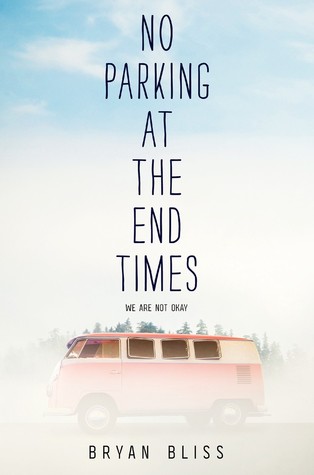
A second example of the “Quirky and Moving” trend is Bryan Bliss’ No Parking at the End Times. Bliss tells the story of twins Aaron and Abigail, whose family has moved to California after their parents fall prey to the teachings of an eccentric religious teacher, Brother John. Their father lost his job and most of their money because he chose to believe that the end was near and Christ would come back on a specific date. When the Lord does not return the family is left devastated and
stranded in San Francisco.
Similar to Mosquitoland this book covers darker topics often found in modern realism. The topics covered fall into Chance’s (2014) category of “Street Violence, Drug Abuse and Homelessness” (71). Arnold presents the ways in which the twins handle their family’s situation each in their own way. Aaron by internalizing and withdrawing from the family and Abigail by trying to get their parents to see what is happening to them, both are realistic views of teens coping mechanisms.
Abigail is having trouble accepting the reality that her parents are truly not thinking about anything besides Brother John and his prophecies. Aaron, however, has decided that his parents do not care what happens to them and wishes to run away, after all, he sneaks out most nights and they do not even notice. Abigail tells how she has begun to miss home, using a series of flashbacks to recall happier times. Abigail sneaks out one night to find him but cannot and must return to their van. When she does find out she is not happy but accepts it because her brother is finally talking with her again. The following day everything seems to go well, except their parents still do not notice them.
A few days later both of them run away, Aaron first then Abigail because she feels left behind. When Abigail finds her brother, he is running out of the church with stolen money. They chose to split up to find one of their friends and buy tickets to go home. Aaron is beaten up while they are apart. The darkness of street violence is noted by the words of the paramedics who come to help Aaron, they call him a ‘street kid’ and do not seem to care (Bliss, 2015, 259). Abigail rushes to find her parents, creating a sense of hope that they will be rescued from the streets. Once she finds them it takes a few moments to convince them to go, especially her father who believes Brother John. However, the story ends on a happy note with the family in Aaron’s hospital room together knowing he will recover.
Bliss’ coverage of realistic events through strange situations places this book in the trend of “quirky and moving.” The book is moving because it shows the hardships faced by teens when their parents make poor decisions, which many can relate to. The realism in the book allows readers to relate to the characters and demonstrates the profound impact of this trend.
Conclusion
            Young adult books follow trends which change based on what teens want to read but they also shape what teens are reading. Retellings present fairy tales to a new audience, often with a modern twist as seen in Cinder. Court of Thorns and Roses presents an empowered heroine who saves the day instead of waiting for her prince. The books in the Quirky and Moving category display the darker side of teen fiction presenting real life situation that teen readers can relate to. Mosquitoland displays the effects of divorce on teens and how they can cope through their own means of escape. No Parking at the End Times discusses the various challenges faced by teens whose parents seem to forget them when making decisions. Each of the books provides a different aspect of the trend they represent and shape the story of teen literature.


References
Amazon. (2017). A court of thorns and roses Kindle editon [Image]. Retrieved from https://www.amazon.com/dp/B00OZP5VRS/ref=dp-kindle-redirect?_encoding=UTF8&btkr=1
Arnold, D. (2015). Mosquitoland: A novel. New York: Viking.
Bliss, B. (2015). No parking at the end times: We are not okay. New York: Greenwillow Books.
Chance, R. (2014). Young adult literature in action: A librarian’s guide (2nd Ed.). Santa Barbara, CA: Libraries Unlimited.
Goodreads. (2017a). Cinder (The lunar chronicles #1)[Image]. Retrieved from https://www.goodreads.com/book/show/36381037-cinder
Goodreads. (2017b). Mosquitoland by David Arnold [Image]. Retrived from https://www.goodreads.com/book/show/18718848-mosquitoland
Goodreads. (2017c). No parking at the end times [Image]. Retrived from https://www.goodreads.com/book/show/22403036-no-parking-at-the-end-times
Hintz, C., and Tribunella, E. L. (2013). Reading children’s literature: A critical introduction. Boston: Bedford/St. Martin’s.
Maas, S. J. (2015). Court of thorns and roses. [Kindle Edition]. New York: Blumsbury.
Meyer, Marissa. (2012). Cinder. New York: Feiwel and Friends.
Parkin, L. (2014). 4 ya book trends to look for in 2015. HuffPost Books. Retrieved from http://www.huffingtonpost.com/lisa-parkin/4-ya-book-trends-to-look-_b_5999458.html

10/7/17

Anne with an E: A Late Review


Well, this has been a long week and I realized I have not read a new book since I last posted. A few months back I noted that I had watched the then ‘new’ Anne with an E on Netflix. I thought I would do a brief write up of the show, though I might miss some elements. [Link to the other post]

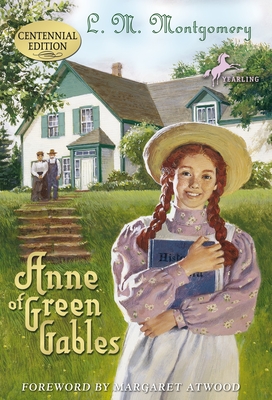
The new show is darker than the older one by the BBC. I enjoyed the old show more but this new reboot does more closely resemble reality. I found the season one cringy and almost too much to watch, it may have lost me for the assumed second season which is coming. Claire Fallon (2017) of Huffington Post shares in her review how the show seems to overemphasize elements for drama's sake, adding in new pieces that do not add to the story of the show. Fallon (2017) sees the show as a good “prestige drama” but not exactly a retelling of the classic Anne of Green Gabel's story told by Montgomery. Marissa Martinelle (2017) of the Slate explains that the show is not bad for the new additions by the writer but is bad because of how it discusses the grim elements and its lack of subtility presented by the source material. She states, “Instead, Anne With an E falters in presenting all of this without an ounce of subtlety, as if its own screenplay had been penned by its feverishly imaginative heroine, who idolizes the gothic and the macabre” (Martinelle, 2017). This new love for the gothic style does not suit the traditional view of Anne or the source material.

For fans of the original book I do not recommend this show, but if you enjoy darker Victorian material you may find a show which you enjoy. To describe this new feeling Fallon (2017) explains that the show is “[a] very good adaptation of Anne is buried within the Jane Eyre–esque Gothicism of ‘Anne with an E.’” The new adaptation beats the darkness over the head adding a disparaging color
Book
to the life of Anne and her triumphs, she is never allowed to win and even when she does it is overshadowed by some dark element of her past or future.  The story is haphazard and lacking in real texture or life it feels that modern elements have been imposed on the old story with Anne simply as the vehicle to show audiences today’s problems. As Martinelle (2017) says the show could be good but “…its lack of trust in the audience to understand why…aspects suit the story” will be a hindrance to it ever being accepted. Just know when you start this show it is not your typical lighthearted Anne tale but a darker grimmer version with less lighthearted moments and more of the reality of Victorian life.

References
Fallon, C. (2017). The relentlessly grim ‘Anne with an e’ reveals the limitations of today’s TV. Retrieved from http://www.huffingtonpost.com/entry/anne-with-an-e-netflix-review_us_5915defae4b0031e737d5510

Indie Bound. (2017). Anne of Green Gables (paperback) [Book image]. Retrieved from https://www.indiebound.org/book/9780553153279

Martinelle, M. (2017). Anne with an e: Netflix’s dark, gritty reboot of Anne of Green Gables has all the subtlety of a chalkboard smashed over your head. Retrieved from http://www.slate.com/articles/arts/television/2017/05/netflix_s_anne_with_an_e_reviewed.html


Netflix. (2017). Anne with an e

Netflix. (April 4, 2017). Anne: Official trailer [Netflix] [YouTube Video]. Retrieved from https://www.youtube.com/watch?v=S5qJXYNNINo

9/30/17

The Invisible Library [Review]

If you enjoy TNT's series The Librarians or steampunk this book is for you. (If you enjoyed The Invisible Library I would recommend checking out the series, it can be seen on Hulu). While there is not Flynn, Irene takes this place nicely and shows that a female librarian can do everything as well. I was excited to read this book, though not certain of what to expect. This is the first installment in Cogman’s The Invisible Library series featuring librarians who are spies, dragons, Fae, and much more. Cogman has included brilliant storytelling and adventure to make a book that I simply could not put down.

Cogman introduced readers to a group of librarian-spies who attempt to protect literature and preserve it, though not without difficulty and risk. The key character is Irene, a lower level librarian, who is sent out by her superior to retrieve a book from a world filled with chaos and Fae. However, unlike previous missions, she will not travel alone but with a trainee named Kai. Kai and Irene are thrown into a near impossible situation and uncertain of who to trust when their only contact turns up dead. Not only to they have to search for the book but worst of all Alberich is there, an evil former librarian who is also seeking the book for reasons of his own. Now they must decide what to do and who they can trust, can Irene even trust Kai, who is hiding secrets of his own.

The vibrant world created by Cogman uses elements of both Gothic and Steampunk tradition to envelop readers in the perilous story of the Library. Every page is filled with action or intrigue. This fantasy/sci-fi novel shows Cogman’s ability to pull readers into the world. Reading the book is like being there alongside the characters. One cannot help being drawn into this page turner, excitement awaits in the Library!
References

Cogman, G. (2015). The invisible library. New York: Tor.


Goodreads. (2017). The invisible library [Image]. Retrieved from https://www.goodreads.com/book/show/21416690-the-invisible-library

TNT. The librarians [TV series]. Retrieved from https://www.hulu.com/the-librarians 

9/16/17

High Druid of Shannara: Tanequil [Review]

The second chapter of Terry Brooks’ High Druid of Shannara trilogy Tanequil continues the journey of Pen, Khyber, Tagwen, and Cinnaminson to save the Ard Rhys, Grianne Ohmsford. They have traveled far to escape from the Druids who are searching for them and hope they can find the Tanequil to form a dark wand.

Interwoven with this adventure are the dangers faced by Pen’s parents, Grainne, and the elves on the battle front. Brooks tale is a wild fantasy adventure that takes the reader into a world that is well loved by many. However, this tale may disappoint because of the similar feel to the story line in The Elfstones of Shannara with the saving of the Ellcrys and the sacrifice made by Pen and Cinnaminson. [Spoiler Alert] The ending with Pen was a disappointment, so much time was spent trying to save Cinnaminson from the monster just to have her “die” was awful. Brooks used the similar trope of finding and losing a love in many of his other books in the series, such as Ahren losing his love on the voyage of the Jerel Shannara and the loss of the Ellcrys/Amberle. This finding of the dark want could have been handled differently with a new way of retrieving a necessary piece to save the world save the loss of a love.

The writing style is good, though with so many adventures it can confuse some. I did not feel as attached to the Elves fighting and did not want to see their story play out. The disjointed tale between the Druids, Federation, and Free Born continues over from the Voyage of the Jerle Shannara. This story seems simply to be a back drop in the first book in the High Druid trilogy suddenly takes precedence in this book. It simply could have been left out and the story would still have been good.


I would recommend this book but only if you have read others in the world of Shannara, it is not as good as the others. Start with The Sword of Shannara for a great book in the series, I might even suggest simply reading the first four books the Shannara books if you do not desire to read multiple series about similar themes/stories. 

References

Brooks, T. (2004). High druid of Shannara: Tanequil. New York: Del Rey.

Goodreads. (2017). Tanequil (high druid of Shannara #2). [Cover image]. Retrieved from https://www.goodreads.com/book/show/15552.Tanequil

9/2/17

Terry Brooks' High Druid of Shannara: Jarka Ruus Summary/Review

I recently found Terry Brooks’ Sword of Shannara series, as one who enjoys fantasy and magical adventures I was excited. I have now read many of his books and am starting the High Druid of Shannara trilogy beginning with the first book Jarka Ruus.
Jarka Ruus begins twenty years after the return from the Old World by the remaining crew of the Jerrle Shannara.

Voyage of the Jerele
In the previous adventure the descendant of the original bearer of the Sword of Shannara, Bek Ohmsford, must find a way to save the world and his sister Grainne now known as the Isle Witch. This adventure is faced with many perils, not including the fact that the Isle Witch wishes to kill Bek and his companions. [Spoiler] In the end the Druid Walker charges Grainne, who has been rescued from the clutches of the Morgawr (her captor/mentor) to take up the Druid cause.

Jarka Ruus
Map of the World of Shannara
[Brooks, 2017 Endpapers]
Grainne has risen as the Ard Rhys of the new Druid order but not all is as good as it appears. She still has many enemies who she wronged while the Isle Witch. The dark path which those who hate her have chosen take them to an even darker place. A group led by Shadea plot to remove her from power and take over the order. The plan works and carries Grainne beyond the Forbidding (where evil is kept at bay, check out the other books in the world of Shannara to learn more). Hope seems lost except for one boy Penderrin (Pen), Grainne’s nephew. Grainne’s faithful servant Tagwen goes in search of her brother in hopes of saving her after all, Bek has magic too. When Bek is nowhere to be found, seeks Pen’s help. As they go they meet both friends and foes in their search to help Grainne. Each of the companions has their own strength and misgivings. The adventure is continued in the second book Tanequil following Pen and his companions to help Grainne.

Review
This book is for those who enjoy adventures and fantasy. I enjoyed the book because I had read the other books in the World of Shannara. I would recommend this book for those who like fantasy but only after reading at least The Voyage of the Jerle Shannara trilogy where Grainne and Bek are introduced. For a fuller understanding of the world began with Shannara then read The Heritage of Shannara followed by the Voyage and this book.  [for a full list of reading order suggestion check out Brooks’ website]. The writing style moves the reader into the world. Each character can stand on their own. While the book is made better by understanding the world it can stand alone if you want to read this story alone. Another interesting point is the Steampunk/modern elements present in this world through the airships alongside the Druid magic. Each story has been more exciting than the previous.


References
Brooks, T. (2003). High Druid of Shannara: Jarka Ruus. New York: Del Rey.

Brooks, T. (2017). Reading orders. Retrieved from http://terrybrooks.net/books/reading-orders/  
Goodreads. (2017). High Druid of Shannara: Jarka Ruus [Image]. Retrieved from